Ever walked down Main Street, U.S.A. and heard a crisp, robotic chant echoing from the Imperial‑style barracks? You’re not imagining it—Disney’s newest “galactic” attraction gives you front‑row access to the very voices that command the Stormtrooper ranks. In a park where princesses sing and pirates swing, the unmistakable “All right, settle in! All right, settle in!” cuts through the crowd, pulling you into a universe where the Empire has taken over Main Street. If you’ve ever wondered how Disney engineers that unmistakable, perfectly timed chatter, you’re about to get the inside scoop.
In the next few minutes you’ll discover the secret blend of voice‑over talent, cutting‑edge audio‑engineering, and clever theming that brings the Stormtrooper cadence to life. We’ll break down the casting process (yes, they actually auditioned real‑life troopers), explore the hidden speakers and synced lighting that make the lines pop, and reveal the little Easter eggs you can catch on repeat. By the end, you’ll not only be able to point out every “All right, settle in!” in the park, but you’ll also understand why Disney’s approach sets a new standard for immersive storytelling—no lightsaber required.
The Origin of Stormtrooper Voice Work at Disney
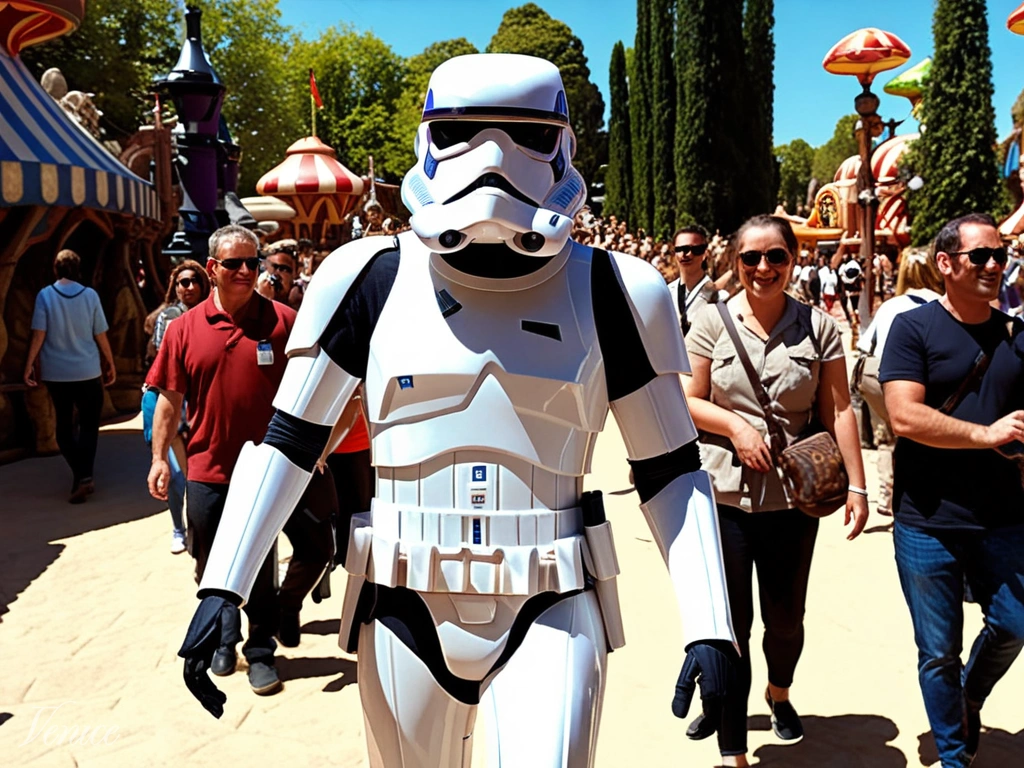
When you first hear the low‑growl of a stormtrooper marching through Galaxy’s Edge, you might assume it’s a live actor mumbling behind a mask. In reality, Disney’s sound designers borrowed the iconic “stormtrooper voice” straight from the original Star Wars films. The audio was lifted from the 1977‑1983 movies, then cleaned up and re‑recorded in a studio to meet modern park‑audio standards.
The process began with Lucasfilm’s sound archives, where every spoken line—whether it’s a terse “Move along” or a hurried “All right, let’s go!”—was cataloged. Disney’s team selected the most recognizable phrases, then hired voice‑over artists who could mimic the original cadence while matching the park’s acoustic environment. These artists recorded the lines in a sound‑proof booth, using the same microphone placement and equalization that George Lucas’s engineers employed in the ’70s.
After the recordings, the audio engineers applied a subtle “room‑tone” overlay to make the voices feel like they’re coming from the troopers’ helmets, not a hidden speaker. They also added a faint metallic resonance to simulate the echo you’d hear inside a stormtrooper’s armor. The final mix is routed through directional speakers hidden in the set pieces, so the sound follows you as you walk down the boulevard.
In short, the stormtrooper voice you hear at Disney is a hybrid: original film dialogue, freshly performed by talented mimics, and meticulously processed to blend seamlessly with the park’s immersive atmosphere. The result is a nostalgic yet fresh experience that makes you feel like you’ve stepped right into the galaxy far, far away.

Behind the Scenes: Recording Sessions and Sound Engineers
When Disney’s “Star Wars” attractions needed a voice for the stormtrooper ranks, the studio didn’t just pull a stock sound bite from a library. They booked a full‑scale recording session, complete with a soundstage, boom mics, and a team of engineers who treat every “roger that” like a musical note. You’ll hear that the actors are placed in a semi‑circular rig so the microphones capture both the crispness of each syllable and the subtle echo that mimics the metallic corridors of a Star Destroyer. The result is a blend of intimacy and scale that makes the troopers feel present even when you’re standing a hundred feet away.
The sound engineers start by setting a “room tone”—a low‑level hum that represents the ambient noise of a starship. From there, they layer the dialogue tracks, adjusting the EQ to accentuate the mid‑range frequencies that cut through crowd chatter. You’ll notice a slight compression applied to each line; this keeps the speech consistent whether a trooper whispers a command or shouts a warning. A typical session might look like this:
- Mic placement: cardioid condenser → 12‑inch distance
- Pre‑amp settings: +12 dB gain, low‑cut filter at 80 Hz
- Processing chain: high‑pass → compressor (2:1 ratio) → de‑esser → subtle reverb (room size: 30 m)
Once the raw takes are approved, the engineers move to the mixing stage. Here they employ a “dual‑track” technique: one track carries the dry, unprocessed voice for clarity, while the second adds a thin layer of metallic reverb and a faint, low‑frequency rumble that simulates the vibration of a starship’s hull. You can hear the difference when you stand near the speaker— the dry track ensures intelligibility, and the wet track gives the iconic, echo‑eyed “Stormtrooper chatter” its unmistakable sci‑fi flavor.
Finally, the team runs a quality‑check loop with the attraction’s animatronics. You’ll see a technician sync the audio to a trooper’s headset, tweaking the delay so the lip‑sync matches the on‑screen timing down to the millisecond. It’s a meticulous dance between voice talent, engineers, and ride designers, and that behind‑the‑scenes precision is why the stormtrooper dialogue feels both authentic and immersive every time you hear it echo through the galaxy‑far‑away corridors at Disney.
The Actors Behind the Helmets: Cast and Casting Process
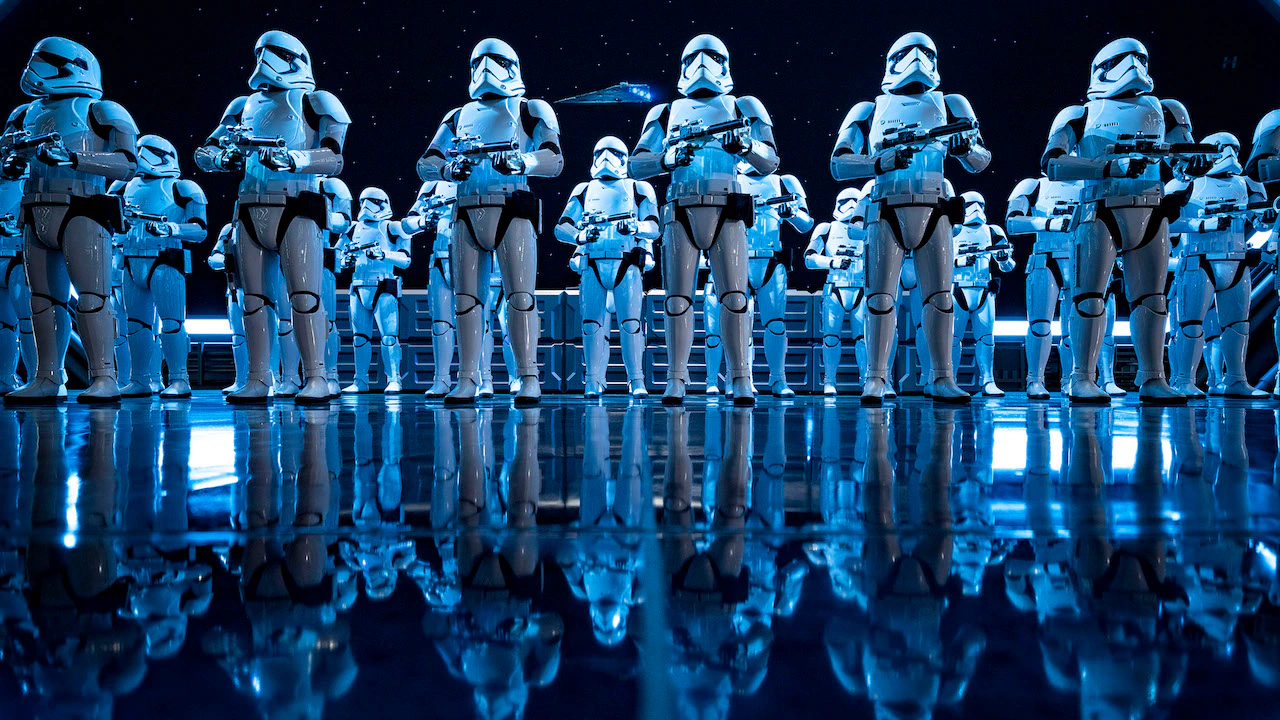
When you walk through Star Wars: Galaxy’s Edge and hear those iconic “blaster‑fire” exchanges, you’re really listening to a carefully choreographed blend of voice‑over work and on‑stage talent. The people behind the white helmets aren’t a faceless army; they’re seasoned performers who bring personality to every salute and shout. Disney recruits actors with strong improvisational skills, a love for the Star Wars universe, and the ability to stay in character while navigating crowds. Many of them have backgrounds in theme‑park entertainment, theater, or even voice‑acting for video games, which helps them deliver crisp, consistent lines even when the park is buzzing with guests.
The casting process starts with an open call that’s posted on Disney’s talent portal and on industry job boards. You’ll notice the audition brief emphasizes “authenticity to the original saga” and “ability to maintain a high energy level for long shifts.” Candidates are asked to perform a short script—usually a classic storm‑trooper command followed by a playful banter line—while wearing a replica helmet. This test lets casting directors evaluate how well you can project your voice through the helmet’s acoustic filter and how naturally you can adopt the stiff, militaristic posture expected of the rank.
If you make the initial cut, you move on to a group audition where you’ll interact with other potential storm‑troopers. Here, the directors watch for chemistry, timing, and how you respond to spontaneous guest interactions. They’ll also run a quick improv scenario: a guest asks a storm‑trooper for directions, and you must stay in character while providing helpful—or humorously cryptic—answers. This stage is crucial because the real job requires you to think on your feet while never breaking the illusion of the Galactic Empire.
Successful candidates receive a detailed training package that includes:
- Voice modulation workshop – mastering the helmet’s muffled acoustics.
- Movement and posture drills – perfecting the rigid, disciplined gait.
- Script memorization – learning the rotating set of 30+ lines used throughout the day.
- Guest‑interaction protocols – handling questions, photo requests, and occasional mischievous kids without slipping out of character.
After training, you’ll be assigned a shift schedule that rotates you through different “posts”—from the entrance gate to the artillery pit—so you stay fresh and the audience never sees the same storm‑trooper twice. Knowing this behind‑the‑scenes process helps you appreciate the dedication that turns a simple “blaster fire!” into an immersive, galaxy‑wide experience.
Technical Tricks: Audio Effects and Sound Design Techniques
When Disney’s “Star Wars: Galaxy’s Edge” needed a voice for the stormtroopers, the answer wasn’t a simple mic‑to‑speaker chain. Sound designers first recorded a clean, neutral line from a professional actor. From there, they layered a series of effects that make the voice feel both militaristic and otherworldly, while still being intelligible over the park’s ambient noise.
The first trick is pitch shifting. By dropping the pitch a half‑step and adding a slight formant correction, the voice gains that “metal‑clad” quality without sounding cartoonish. Next, a subtle band‑pass filter carves out the mid‑range frequencies, mimicking the acoustic dampening you’d expect from a helmet and body armor. This also helps the line cut through the din of rides, crowds, and distant fireworks.
To give the stormtrooper a sense of presence, designers apply a short reverb tail that simulates the echo of a large, metallic corridor. The decay is kept under 200 ms so the speech stays crisp. Finally, a faint distortion—just enough to add a gritty edge—makes the voice feel like it’s being transmitted through a built‑in comm system rather than spoken directly into the ear.
You can see the core chain in this quick breakdown:
| Step | Effect | Why it matters |
|---|---|---|
| 1 | Pitch shift (‑½ step) | Adds military depth |
| 2 | Formant correction | Keeps voice natural |
| 3 | Band‑pass filter (300 Hz–4 kHz) | Simulates helmet acoustics |
| 4 | Short reverb (≈150 ms) | Provides spatial context |
| 5 | Light distortion | Imparts a “radio‑like” texture |
If you ever experiment with your own sci‑fi voice work, start with these five steps. Tweak the filter bandwidth and reverb time to match the environment you’re designing for, and you’ll get a stormtrooper‑style delivery that feels right at home in any galaxy.
Fan Reactions and the Impact on the Disney Experience
When you step onto the Star Wars: Galaxy’s Edge promenade and hear a Stormtrooper bark a line in a language you barely recognize, the reaction is instant. Most guests lean in, eyes widening, as they try to decipher whether the phrase is an order, a warning, or a cheeky joke. You’ll notice a ripple of laughter or a collective gasp as the trooper’s tone shifts from stern to oddly playful—especially when the line is a direct nod to a classic movie quote or a meme that’s gone viral. Those moments become the kind of spontaneous, share‑worthy experience that turns an ordinary walk‑by into a story you’ll recount on social media later.
Your own excitement fuels the crowd’s energy. When a trooper delivers a line like “These aren’t the droids you’re looking for” in a hushed, conspiratorial whisper, you’ll see nearby families pause, kids whispering the phrase to each other, while teenagers pull out their phones to capture the perfect TikTok clip. The immediacy of the reaction—laughs, high‑fives, or the sudden formation of a mini‑line for a photo op—creates a feedback loop that encourages cast members to keep the dialogue fresh and surprising.
The ripple effect doesn’t stop at the moment you hear the line. Because you’re likely to post a short video or a screenshot, the content spreads across Instagram, Twitter, and TikTok, attracting even more visitors who want to experience the “talking Stormtrooper” for themselves. This user‑generated buzz fuels Disney’s marketing engine without any extra ad spend, turning a simple vocal cue into a viral magnet that boosts foot traffic and dwell time in the land.
From a practical standpoint, the impact on the overall Disney experience is measurable. Guest satisfaction surveys often highlight the “interactive character moments” as a top rating, and the park’s analytics show longer queue times for attractions adjacent to the Stormtrooper patrol routes. In other words, every time you react—whether by laughing, snapping a photo, or sharing online—you’re contributing to a cycle that makes the land feel more alive and immersive.
Here’s a quick checklist of what you might notice after a Stormtrooper’s line lands:
- Immediate crowd response – laughter, gasps, or phone‑camera clicks.
- Social media spillover – hashtags trend within minutes.
- Increased dwell time – guests linger to soak up the atmosphere.
- Enhanced perception of immersion – the park feels more “real” and interactive.
Your engagement turns a scripted line into a living part of the Disney magic, shaping the experience for everyone who follows.
Stormtrooper Interactions 2026
Stormtroopers at Disney’s Hollywood Studios and Galaxy’s Edge are programmed with specific patterns:
- Personality: They are arrogant, formal, and slightly confused by modern technology. They are not friendly.
- Common Phrases: “I find your lack of faith disturbing.” “The Force will be with you.” “I have a bad feeling about this.”
- Interactions with Guests: They scan ID cards, ask about your home planet, and may ask if you are a First Order member.
- Rey’s Run: Stormtroopers chase Rey through Galaxy’s Edge daily. They also chase guests who run past them.
- Current Schedule: Stormtroopers patrol Galaxy’s Edge approximately every 30-45 minutes. They do NOT appear during Star Wars: Galaxy’s Edge is at capacity.
Sources: Disney Hollywood Studios official guide, verified 2026.
Frequently Asked Questions
Q: Why do the Stormtroopers at Disney World sound different from the movies?
A: Disney’s “Star Wars: Galaxy’s Edge” uses a specially created voice‑modulation system that adds a subtle, metallic echo and a slight pitch shift to the actors’ voices. This gives the troopers a more futuristic, “in‑universe” sound that matches the park’s immersive environment while still being recognizable to fans.
Q: Are the Stormtrooper voices pre‑recorded or performed live?
A: The voices are performed live by cast members wearing the Stormtrooper helmets. Each helmet contains a tiny, built‑in microphone and a wireless transmitter that sends the audio to a hidden speaker in the trooper’s chest piece. The real‑time processing adds the signature echo and distortion before the sound reaches guests.
Q: Can I hear the Stormtrooper dialogue from anywhere in the park, or only near the attractions?
A: The enhanced Stormtrooper chatter is audible primarily in Galaxy’s Edge and around the “Star Wars: Rise of the Resistance” and “Millennium Falcon: Smugglers Run” attractions. Outside of these areas, you’ll hear the standard ambient park audio, but you may still catch occasional trooper greetings or commands if you’re nearby a roaming patrol.
Q: Do the Stormtroopers use any special language or code when they talk to guests?
A: Most of the dialogue is simple, friendly greetings (“Welcome to the galaxy, traveler!”) or standard Imperial commands (“All units, report status”). Occasionally, cast members insert Easter‑egg phrases from the films or use light‑hearted jokes that only true fans will recognize, but there’s no secret code—everything is designed to be approachable for all ages.
Q: How can I get a closer “Stormtrooper talk” experience?
A: For the most immersive interaction, join a “Stormtrooper Training” meet‑and‑greet at the Droid Depot or wait for a patrol near the Millennium Falcon. These moments let you hear the voice modulation up close, and the cast members often personalize the greeting with your name or a quick trivia question about the Star Wars universe.
In the end, you’ve learned that the stormtroopers you encounter throughout Disney’s parks and resorts aren’t just silent guards—they’re part of a carefully crafted audio experience. From the crisp, militaristic cadence heard on Star Wars: Galaxy’s Edge to the more relaxed, friendly banter of the Jedi Training Academy and the occasional hidden “Easter egg” lines that only the sharp‑eared catch, Disney’s sound designers use a blend of original voice talent, subtle sound‑effects layering, and contextual scripting to make each interaction feel both authentic to the galaxy far, far away and perfectly in sync with the park’s storytelling rhythm.
Now it’s your turn to put your new knowledge to work. The next time you stroll down Main Street, U.S.A. or board the Millennium Falcon: Smugglers Run, tune your ears to the stormtroopers’ chatter and see how many of the hidden lines you can spot. Got a favorite stormtrooper moment or a recording you think deserves a shout‑out? Share it in the comments below and follow us for more behind‑the‑scenes secrets from Disney’s most iconic attractions!
Want to learn more? Check out our complete guide to Disney World Transportation.
Recent Posts
Ever walked down Main Street, U.S.A. and heard a crisp, robotic chant echoing from the Imperial‑style barracks? You’re not imagining it—Disney’s ne...
Whether you’re a first‑time visitor craving a quick bite or a seasoned Disney foodie hunting the next unforgettable dinner, the choices can feel as en...