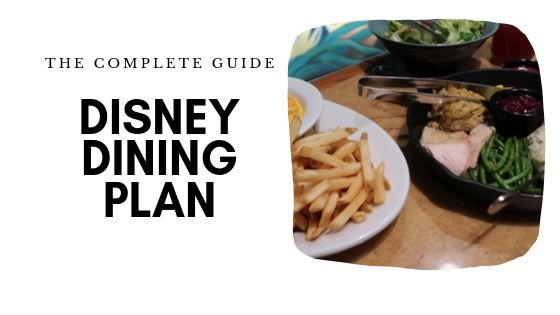
Quick answer: For 2026, Walt Disney World offers two Disney Dining Plans. The Quick-Service Dining Plan costs $60.47 per adult per night, and the standard Disney Dining Plan costs $98.59 per adult per night. Both prices include tax but not tip. Kids ages 3 to 9 eat free on either plan in 2026 when the adults in the room (ages 10+) also purchase a dining plan. A third tier, the Deluxe Table-Service Dining Plan, returns starting January 1, 2027, priced at $163.01 per adult per night.
Planning a Walt Disney World vacation means deciding whether to prepay for meals with a Disney Dining Plan or pay out of pocket as you go. Below is a complete, up-to-date breakdown of what the plan costs in 2026, what each credit gets you, how the free kids’ dining promotion works, what’s changing in 2027, and how to figure out whether it actually saves you money.
What Is the Disney Dining Plan?
The Disney Dining Plan is a prepaid meal package sold as an add-on to a Walt Disney World Resort hotel and ticket package. Instead of paying for each meal individually, you buy a set number of meal and snack credits for every night of your stay. Those credits load onto your MagicBand, Key to the World card, or Disney MagicMobile pass, and you tap or scan to redeem them at more than 200 participating restaurants across the four theme parks, Disney Springs, and Disney’s resort hotels.
It first launched in 2005 and has changed shape several times since. Disney discontinued the old Premium and Platinum tiers in 2017, paused the entire program in 2020, and briefly replaced it with a scaled-back “Disney Dining Plan Plus” before bringing the full plan back for 2024 travel. The plan is currently in the middle of another expansion: 2026 keeps the two-tier structure, and a returning Deluxe tier arrives for 2027 stays.
The Disney Dining Plan is exclusive to Walt Disney World in Florida. Disneyland Resort in California does not currently offer a comparable prepaid dining plan.
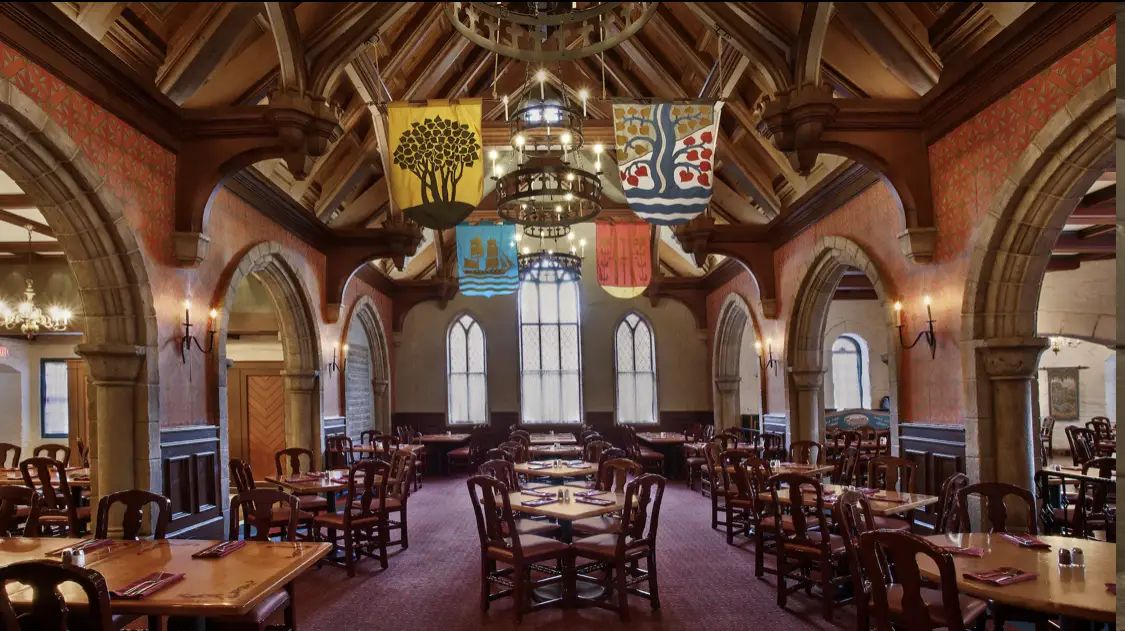
2026 Disney Dining Plan Options and Pricing
Two tiers are available for guests checking in through December 31, 2026.
|
Plan |
Adult (10+) per night |
Child (3-9) per night |
What one night includes |
|---|---|---|---|
|
Quick-Service Dining Plan |
$60.47 |
$26.16 (often $0, see below) |
2 quick-service meals, 1 snack or nonalcoholic drink, 1 resort-refillable mug |
|
Disney Dining Plan (standard) |
$98.59 |
$31.94 (often $0, see below) |
1 quick-service meal, 1 table-service meal, 1 snack or nonalcoholic drink, 1 resort-refillable mug |
Notes on 2026 pricing:
- Prices already include Florida sales tax. Gratuity is not included, except at dinner shows and Cinderella’s Royal Table, where an 18% service charge is built in.
- Children under age 3 do not need a dining plan and eat free from an adult’s plate (or get their own plate at buffets).
- Kids ages 3 to 9 must order from a children’s menu where one is offered.
- The plan must be purchased for every night of the stay and for every person in the party ages 3 and up. You cannot buy it for only part of your trip or for only some members of your party.
Kids Eat Free: The Big 2026 Perk
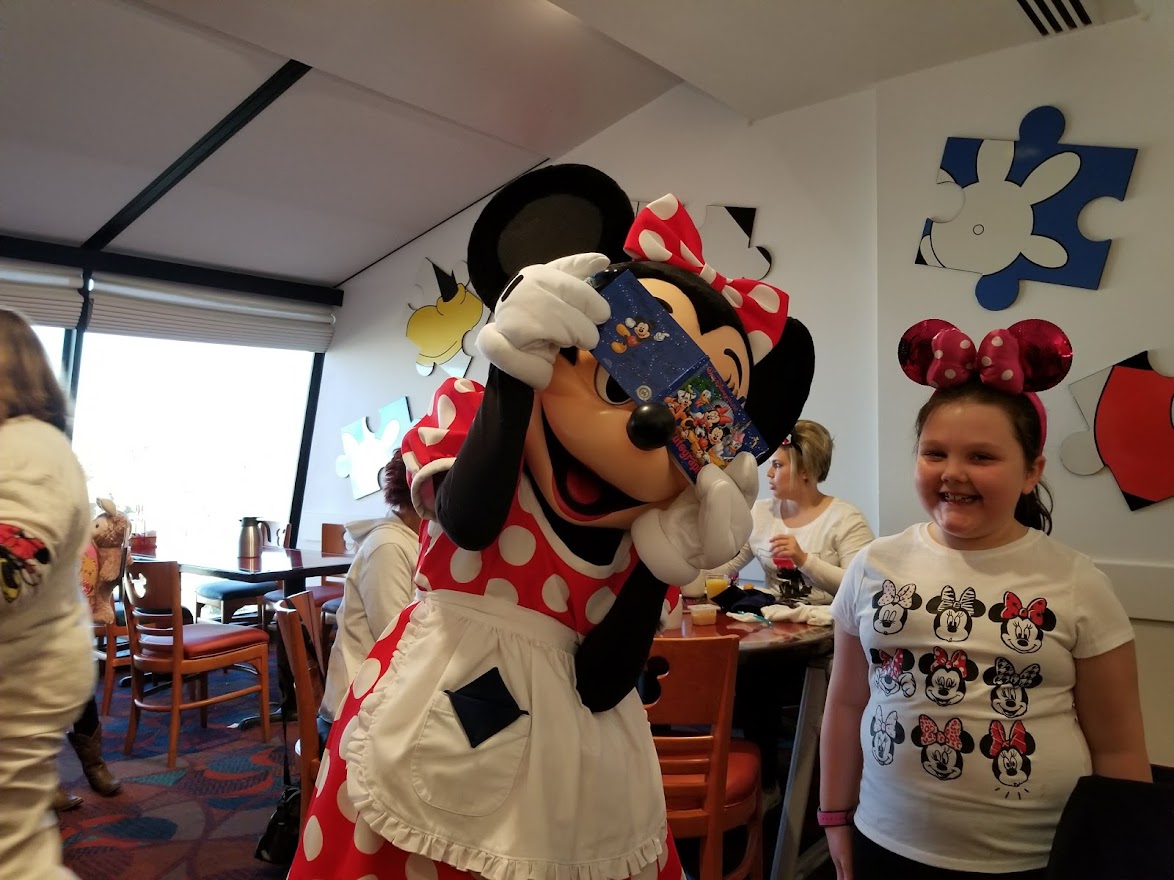
The headline change for 2026 is the Free Dining Plan for Kids promotion. When you book a Walt Disney World Resort hotel package that includes tickets and a dining plan for every guest ages 10 and older in the room, children ages 3 to 9 receive the matching dining plan (Quick-Service or standard) at no extra cost. That effectively drops the child price shown above from roughly $26 to $32 per night down to $0.
This is a limited, package-based promotion, and availability is capped, so it is not guaranteed on every room type or travel date. It is worth checking with Disney or your travel agent before you finalize a trip built around it.
Heads up if you’re planning a 2027 trip: this specific free kids’ dining offer is not carrying over. Disney has said 2027 packages will instead include a savings offer of up to 20% on kids’ dining rather than a fully free plan.
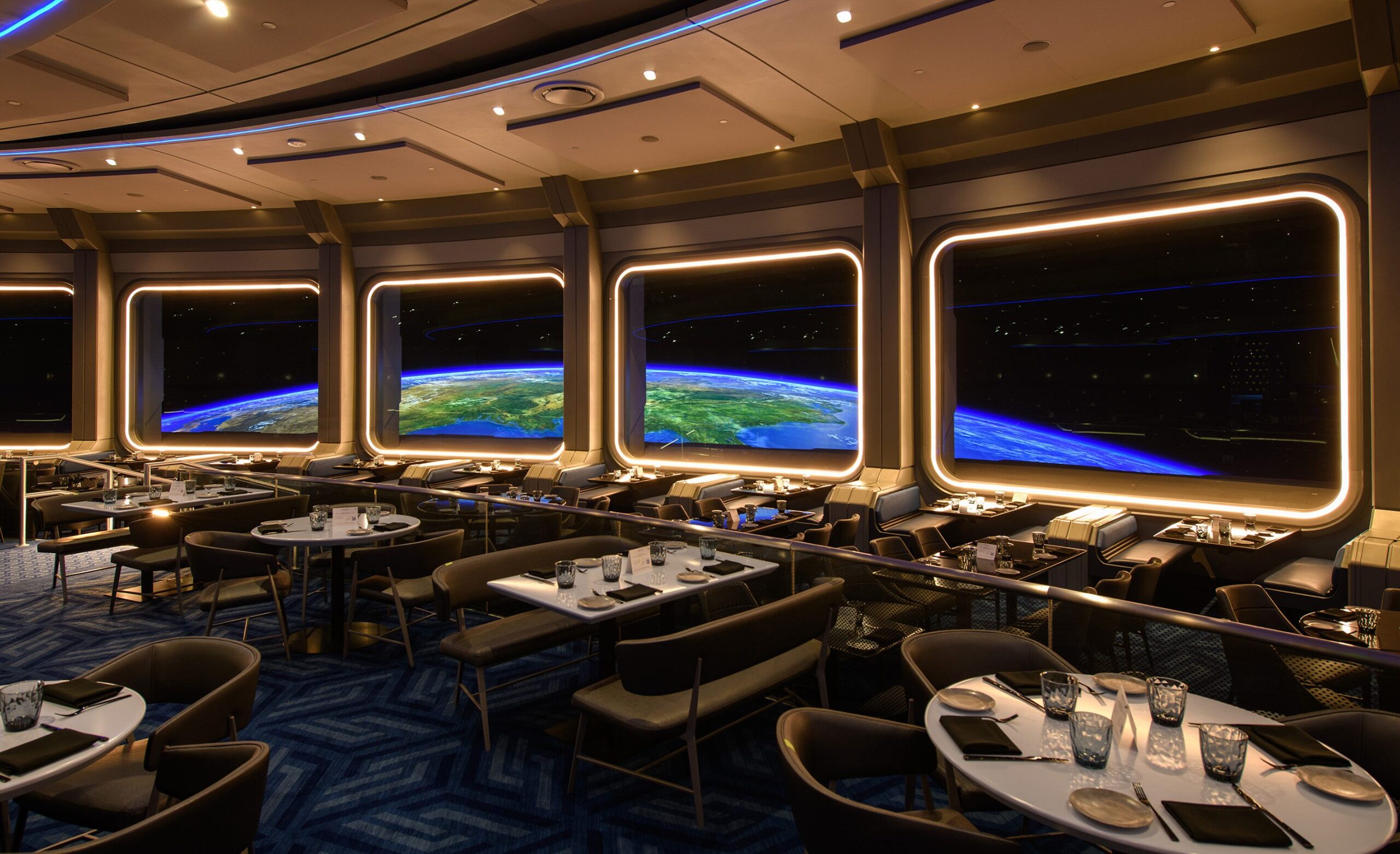
New for 2027: The Deluxe Table-Service Dining Plan Returns
Starting with arrivals on January 1, 2027, Disney is adding a third, higher tier and renaming the other two. Here is the full 2027 lineup:
|
Plan (2027 name) |
Adult (10+) per night |
Child (3-9) per night |
What one night includes |
|---|---|---|---|
|
Quick-Service Dining Plan |
$62.78 |
$25.82 |
2 quick-service meals, 1 snack, 1 refillable mug |
|
Table-Service Dining Plan (formerly “Disney Dining Plan”) |
$99.87 |
$31.94 |
1 quick-service meal, 1 table-service meal, 1 snack, 1 refillable mug |
|
Deluxe Table-Service Dining Plan (new) |
$163.01 |
$46.85 |
2 table-service meals, 1 quick-service meal, 1 snack, 1 refillable mug |
The Deluxe tier is the first true premium Disney Dining Plan since the original Deluxe Dining Plan was discontinued after the pandemic-related park closures. It is built for guests who want two sit-down meals every night, which opens the door to stacking a character breakfast with a signature dinner, or a lunch and dinner both at table-service restaurants, without juggling multiple credit types.
What Counts as a “Credit”
Understanding what you actually get per credit is the key to judging value.
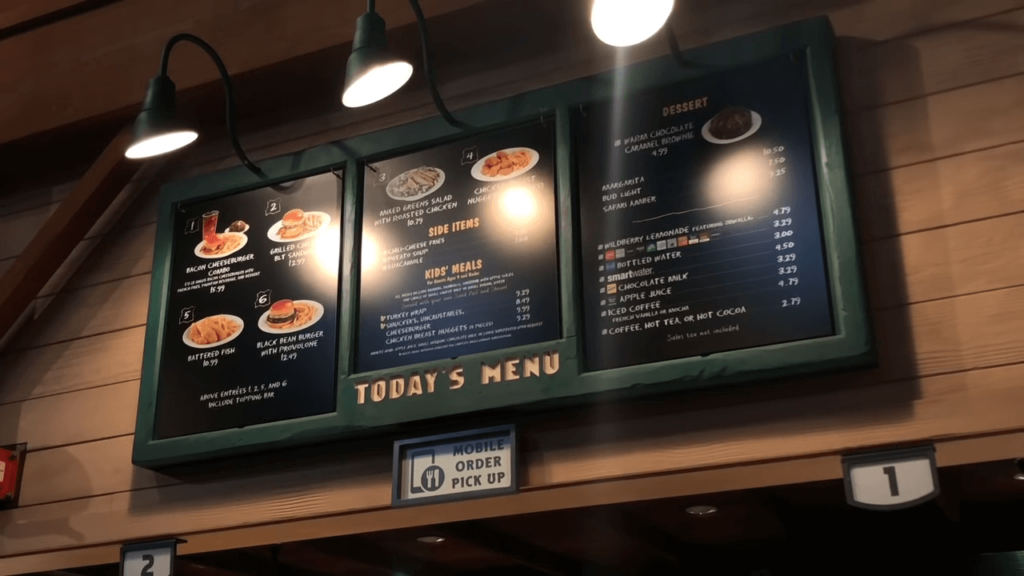
Quick-service credit: One entrée or combo meal plus one beverage at a counter-service restaurant. Guests under 21 get a nonalcoholic drink, including soda, coffee, tea, hot chocolate, smoothies, or milkshakes where offered. Guests 21 and older can swap the drink for a single beer, wine, or cocktail where available.
Table-service credit: One entrée, one beverage, and a dessert at lunch or dinner, or a full all-you-care-to-enjoy buffet or family-style meal where offered. The same 21+ alcohol swap applies. Some character meals, signature restaurants, and dinner shows require two table-service credits per person instead of one, so check a restaurant’s dining plan status before you book.
Snack credit: One snack per night, redeemable at quick-service windows, outdoor carts, and select shops for a single-serving item such as popcorn, a specialty cupcake, a piece of fruit, a bag of chips, or a bottled drink.
Resort-refillable mug: One per guest, good for unlimited refills of fountain drinks, coffee, and tea at self-service beverage stations inside your Disney resort hotel for the length of your stay. It only works at your resort, not inside the theme parks.
How Dining Plan Credits Actually Work
- Every credit for your entire party pools together and can be used in any order, by anyone in the party, throughout the trip.
- Credits are non-transferable to guests outside your reservation.
- Unused credits roll over from day to day and all expire at midnight on your checkout day. Nothing carries home with you.
- The plan does not book restaurant reservations for you. Advance dining reservations open 60 days before your check-in date and are strongly recommended for popular table-service and character-dining locations, since the dining plan only prepays the meal, it does not guarantee a table.
- You can track remaining credits in the My Disney Experience app or by asking for a printed receipt after each meal.
How to Buy It
The Disney Dining Plan can only be added to a Walt Disney World Resort hotel package that also includes theme park tickets. It is not sold separately, and you cannot add it once you’re already at the parks. You add it either when you first book your package or during a modification window before arrival, as long as availability allows. If you’re staying off-site or at a non-Disney-owned hotel inside Disney Springs, you are not eligible.
Is the Disney Dining Plan Worth It?
The honest answer is that it depends entirely on how your family eats. The dining plan is not automatically a discount. Whether it saves you money comes down to comparing the per-night plan cost to what you would actually spend paying out of pocket for the same meals.
It tends to be worth it if you:
- Plan to eat at least one table-service or character meal per day, especially at restaurants running $35 to $60 per adult, where a single table-service credit already beats the cash price.
- Are traveling in 2026 with kids ages 3 to 9 who qualify for the free kids’ dining promotion, since that removes an entire category of cost.
- Want a fixed, prepaid food budget and would rather not track spending during the trip.
- Drink alcohol at meals, since the 21+ beverage swap lets you apply a credit toward a cocktail, beer, or glass of wine that would otherwise cost $12 to $16 on its own.
It tends to be a worse deal if you:
- Mostly eat quick-service meals and skip table-service dining, since a typical quick-service entrée and drink runs $16 to $22, making it hard to out-earn the $60.47 nightly Quick-Service Dining Plan cost for two meals plus a snack.
- Have light eaters or guests who share entrées, since unused portions of a credit don’t carry any refund value.
- Are traveling as adults only past the 2026 kids-eat-free window, since none of the child-focused promotions apply.
- Prefer bringing your own snacks and refillable water bottles into the parks, which sidesteps a meaningful share of what the snack credit and mug are meant to offset.
A worked example
Two adults and two kids (ages 3-9), five nights, standard Disney Dining Plan, booked under the 2026 kids-eat-free promotion:
- Adult cost: 2 adults x $98.59 x 5 nights = $985.90
- Child cost: $0 (covered by the promotion)
- Total dining plan cost: $985.90 for the whole trip
Compare that to five nights of paying cash for one table-service meal and one quick-service meal per person per day, plus snacks and drinks, and the dining plan usually comes out ahead for this exact scenario, largely because the kids’ meals are free rather than because the adult pricing itself is a steep discount.
Tips for Getting the Most Out of Your Dining Plan
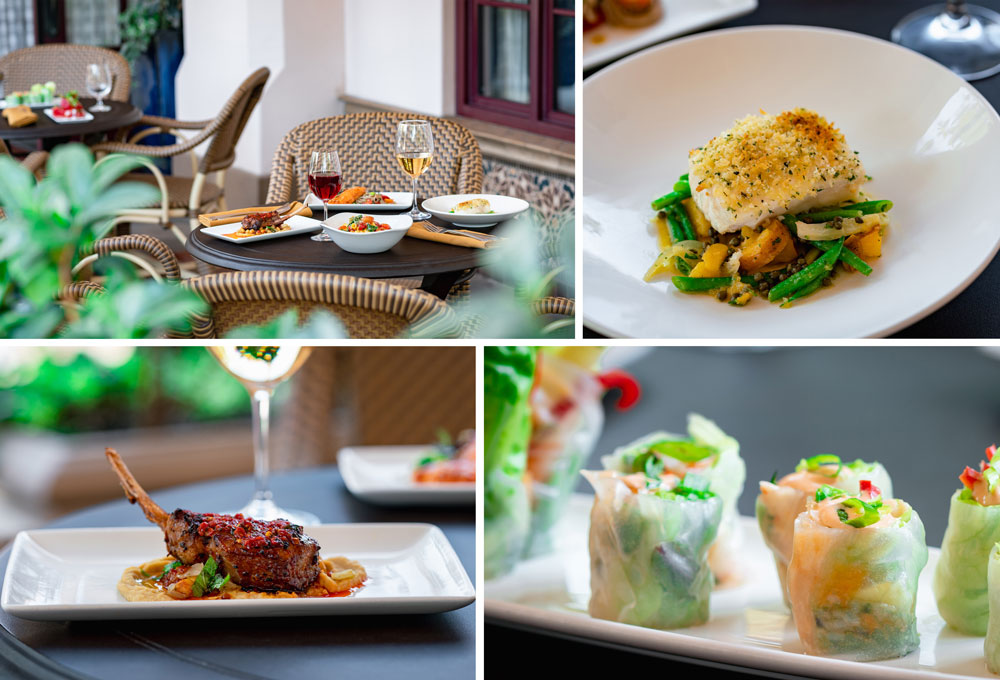
- Save table-service credits for your priciest meals. Character dining, signature restaurants, and buffets deliver the best dollar-for-dollar return on a table-service credit.
- Use snack credits on higher-value items. A specialty churro, a festival kiosk item, or a large baked good stretches a snack credit further than a bottle of water.
- Skip the quick-service credit for breakfast if you can. A light breakfast bought out of pocket, or food brought from home, is often cheaper than “spending” a full quick-service credit on a pastry and coffee.
- Check restaurant credit requirements before booking. A handful of signature restaurants and dinner shows require two table-service credits per person, which changes the math fast.
- Track your balance daily. Use the My Disney Experience app so you’re not left with unused credits, or scrambling to use several at once, on checkout day.
Credit Values: What Each Credit Is Actually Worth
Understanding credit values helps you maximize your dining plan investment. Here’s what each credit type is worth in real dollars:
Quick Service Credit Values
Quick service credits are worth $12-$19 depending on what you order. The best value comes from ordering entrees with sides and drinks. Popular high-value options include:
- Cosmic Ray’s Starlight Cafe (Magic Kingdom): Chicken strips basket, $14.99
- Satuli Canteen (Animal Kingdom): Bowl with protein, $16.99
- Woodfired Pizza (Disney Springs): Large pizza, $17.99
Table Service Credit Values
Table service credits are worth $35-$65+ depending on the restaurant. For maximum value, use your credits at character dining or signature restaurants:
- Cinderella’s Royal Table: $65+ value per credit
- Be Our Guest Restaurant: $55+ value per credit
- Tusker House Restaurant: $45+ value per credit
Snack Credit Values
Snack credits are worth $5-$8. Best uses include:
- Large specialty cupcakes: $6.99
- Fresh fruit cups: $5.99
- Premium ice cream treats: $7.99
- Popcorn refills: $6.25 (with souvenir bucket)
Participating Restaurants
The Disney Dining Plan works at over 200 restaurants across Walt Disney World. Here’s where you can use your credits:
Magic Kingdom
- Quick Service: Cosmic Ray’s Starlight Cafe, Pecos Bill Tall Tale Inn, Columbia Harbour House, Pinocchio Village Haus
- Table Service: Be Our Guest, Cinderella’s Royal Table (2 credits), The Crystal Palace, Tony’s Town Square
EPCOT
- Quick Service: Sunshine Seasons, Les Halles Boulangerie, Katsura Grill, Tangierine Cafe
- Table Service: San Angel Inn, Garden Grill, Teppan Edo, Le Cellier (2 credits)
Hollywood Studios
- Quick Service: Docking Bay 7, Woody’s Lunch Box, ABC Commissary, Backlot Express
- Table Service: Oga’s Cantina, 50’s Prime Time Cafe, Sci-Fi Dine-In, The Hollywood Brown Derby (2 credits)
Animal Kingdom
- Quick Service: Satuli Canteen, Flame Tree Barbecue, Pongu Pongu, Harambe Market
- Table Service: Tusker House, Yak & Yeti, Tiffins (2 credits)
Disney Springs
- Quick Service: The Polite Pig, D-Luxe Burger, Blaze Pizza, Morimoto Asia Street Food
- Table Service: The Boathouse, Wine Bar George, Frontera Cocina, Chef Art Smith’s Homecomin’
Gratuity and Tips
Gratuity is not included in the Disney Dining Plan, so you’ll need to budget for tips. Here’s what to expect:
- Table Service: 18-20% tip on the pre-discount menu price
- Cinderella’s Royal Table: 18% service charge is automatically added
- Dinner Shows: 18% service charge is automatically added
- Quick Service: No tip required, but tip jars are available
For a family of four eating one table service meal per day, expect to spend $40-60 on tips during your stay.
Alcohol and Beverages
All Disney Dining Plan tiers now include alcoholic beverages for guests 21 and older. This is a significant perk that adds value to the plan:
- Adults 21+: Can substitute acoholic beverage for non-alcoholic drink
- Beer, wine, cocktails: Included at table service and quick service locations
- Value consideration: Alcoholic drinks typically cost $10-15 each, adding $30-45 per day for adults who drink
For families, this means the dining plan offers better value for adults who enjoy alcohol, while kids and non-drinkers may find the standard plan sufficient.
2-Credit Restaurants: Are They Worth It?
Some signature restaurants and special dining experiences cost 2 table service credits instead of 1. Here’s the honest truth:
Restaurants Requiring 2 Credits
- Cinderella’s Royal Table
- California Grill
- Victoria & Albert’s
- Narcoossee’s
- Le Cellier
- Tiffins
The Math
Two table service credits are worth approximately $70-90 in menu value. Most 2-credit restaurants offer $80-120 in menu value, making them slightly better than average. However, you’re giving up two separate meals for one, which may not be ideal for families with hungry kids.
When to Use 2-Credit Restaurants
- Your last night (use remaining credits)
- Special occasions (anniversary, birthday)
- You’re light eaters who prefer one nice meal over two casual ones
Dining Packages: When Credits Work in Your Favor
Dining packages combine a meal with reserved seating for shows and events. These are excellent uses of your dining plan credits:
- Fantasmic! Dining Package: Includes dinner at Hollywood Brown Derby, Mama Melrose, or Sci-Fi Dine-In plus reserved Fantasmic! seating
- Candlelight Processional: EPCOT’s holiday spectacular with guaranteed seating
- Tusker House + Festival of the Lion King: Character breakfast plus reserved show seating
- Be Our Guest + Happily Ever After: Dinner with castle view for fireworks
Dining packages typically cost the same as a regular table service credit but include premium show seating, making them one of the best values on the dining plan.
What If You Don’t Have Enough Credits?
If you run out of credits before your trip ends, you have several options:
- Pay out of pocket: Simply pay for meals like normal
- Use a different credit type: If you have snack credits left but need a quick service meal, you can sometimes combine 3 snack credits for a quick service meal (ask at the restaurant)
- Upgrade your plan: Contact Disney to upgrade to a higher tier mid-trip
What If You Have Credits Left Over?
Unused dining plan credits expire at checkout. Here’s how to avoid wasting them:
- Use them on your last day: Stock up on snacks and treats for the journey home
- Buy merchandise: Some locations allow you to use snack credits for packaged snacks and treats
- Order room service: If your resort offers room service, use remaining credits for a final meal
- Plan ahead: Track your credits daily using the My Disney Experience app
Annual Passholders and DVC Members
The Disney Dining Plan has specific rules for Annual Passholders and DVC members:
Annual Passholders
- Can purchase: Yes, if booking a Disney resort hotel package
- Cannot purchase: Standalone dining plan without hotel booking
- Alternative: Pay out of pocket or use restaurant discount programs
DVC Members
- Can purchase: Yes, when booking with points through Disney
- Can add: Dining plan to DVC reservations
- Stacking: Can combine with Kids Eat Free promotion
- Best value: DVC members often get better overall value by booking discounted rooms and paying for meals separately
Frequently Asked Questions
How much does the Disney Dining Plan cost in 2026? The Quick-Service Dining Plan costs $60.47 per adult per night and $26.16 per child (ages 3-9). The standard Disney Dining Plan costs $98.59 per adult per night and $31.94 per child. Both prices include tax but not gratuity. Kids ages 3 to 9 can get either plan free in 2026 through Disney’s kids-eat-free package promotion.
Do kids really eat free with the Disney Dining Plan? For 2026 arrivals, yes, with conditions. Children ages 3 to 9 receive the same dining plan as the adults in their room at no charge, as long as every guest ages 10 and older in the room also purchases a dining plan. This offer is limited to 2026 travel and does not carry over to 2027 packages.
What’s included in one night of the Disney Dining Plan? The standard plan includes one quick-service meal, one table-service meal, one snack or nonalcoholic drink, and one resort-refillable mug per person, per night. The Quick-Service Dining Plan includes two quick-service meals, one snack, and one mug per person, per night.
Is there a Deluxe Disney Dining Plan? Not for 2026. The Deluxe Table-Service Dining Plan returns for guests checking in starting January 1, 2027, priced at $163.01 per adult and $46.85 per child per night, and includes two table-service meals plus one quick-service meal, one snack, and one mug each night.
Does the Disney Dining Plan include alcohol? Guests 21 and older can substitute their included nonalcoholic beverage for one beer, wine, or cocktail at quick-service or table-service meals where alcohol is offered. This applies on every current tier of the plan.
Is the Disney Dining Plan worth it? It depends on how you eat. It tends to pay off for guests who plan at least one table-service or character meal per day, drink alcohol with meals, or qualify for free kids’ dining in 2026. It tends to be a worse value for light eaters, guests who mostly eat quick-service meals, or those who prefer to bring their own snacks.
Can I buy the Disney Dining Plan separately, without a resort package? No. It is only available as an add-on to a Walt Disney World Resort hotel and ticket package, purchased at booking or during a modification window before arrival. It cannot be purchased once you’re at the parks.
What happens to unused dining plan credits? Credits roll over from day to day during your stay but expire at midnight on your checkout day. Any leftover snack credits are worth using on bottled drinks, candy, or other take-home-friendly items before you leave. Meal credits cannot be redeemed for cash or refunded.
Do I need dining reservations if I have the Disney Dining Plan? Yes. The dining plan prepays for meals, but it does not book a table for you. Advance dining reservations open 60 days before arrival and are strongly recommended for popular table-service and character-dining restaurants.
Is the Disney Dining Plan available at Disneyland? No. The Disney Dining Plan is exclusive to Walt Disney World Resort in Florida. Disneyland Resort in California does not currently offer a comparable prepaid dining plan.
Recent Posts
Ever walked down Main Street, U.S.A. and heard a crisp, robotic chant echoing from the Imperial‑style barracks? You’re not imagining it—Disney’s ne...
Whether you’re a first‑time visitor craving a quick bite or a seasoned Disney foodie hunting the next unforgettable dinner, the choices can feel as en...